
We analyzed this claim: is it true that
Binance is poised to secure five new Asian operating licences in 2027 despite its $6.3 billion security breach?
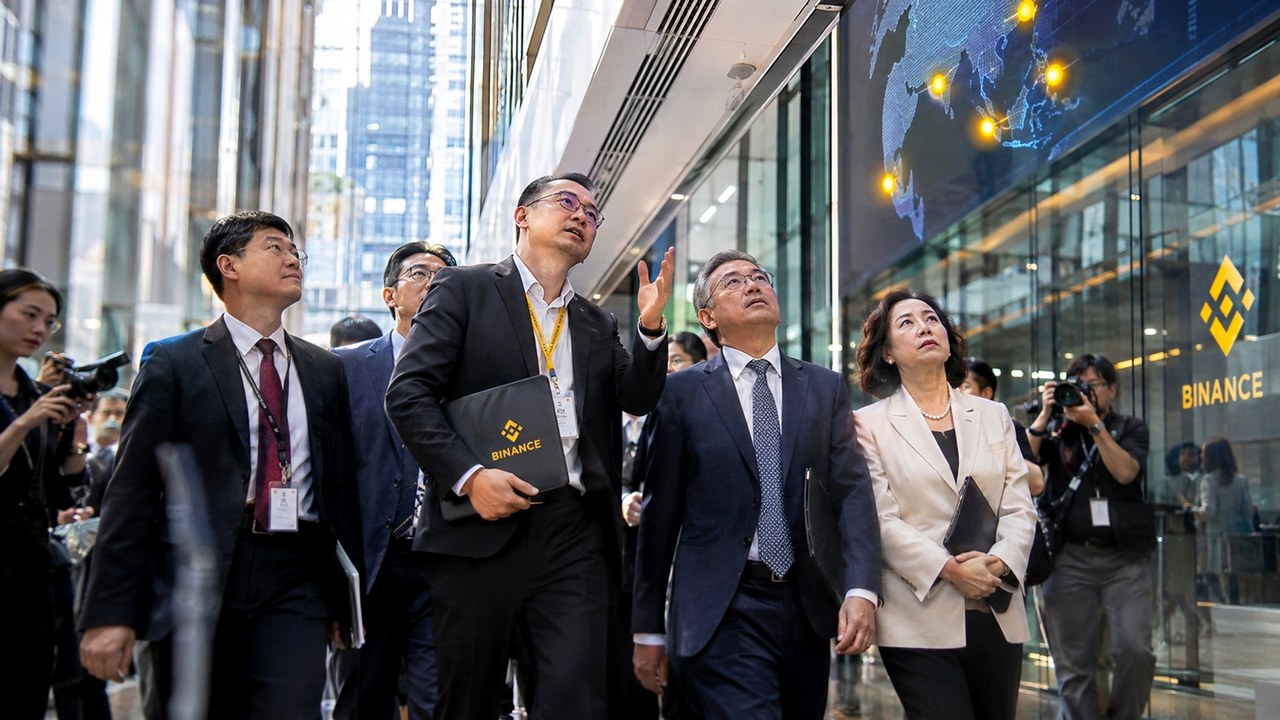
Binance's 18 November interview confirms it wants to enter five Asian markets in 2027, but the countries remain unnamed, three talks are described as advanced only by Binance, and no new licence or completed independent security audit has been shown.
Binance Plans Asia Expansion Before Post-Hack Audits
Three weeks after a $6.3 billion theft, the crypto exchange wants five new Asian licences without naming the countries or showing audited accounts.
In a nutshell
Three weeks after suffering a record $6.3 billion cryptocurrency theft blamed by the FBI on North Korean hackers, Binance announced on 18 November 2026 that it is negotiating to enter five or six Asian markets in 2027. Although Binance says it has fully repaid affected customers from its own funds, rebuilt its compromised transfer systems and secured court orders to freeze stolen assets, the exchange has not named its target countries, published a completed independent security audit or shared standard audited financial statements. Whether Asian financial regulators approve new licences will depend on whether Binance supplies independent proof of its financial health and cyber defenses.
Highlights
- Attackers stole roughly $6.3 billion in cryptocurrency from Binance on 29 October 2026, an operation the FBI attributes to North Korea's TraderTraitor group.
- Binance says it covered 100% of affected customer assets by 13 November using its corporate treasury, user-protection fund and futures-insurance surplus.
- On 18 November, Asia-Pacific head SB Seker said Binance is in talks to enter five or six Asian markets in 2027, with three discussions at an advanced stage.
- Seker confirmed that Binance does not disclose standard audited profit-and-loss accounts or balance sheets even to its outside investor MGX.
- U.S. authorities authorized seizing or freezing more than $1.2 billion in stolen funds on 12 November, and an Abu Dhabi court issued a $6.5 billion worldwide freeze order on 18 November.
Binance Post-Hack Reserve Snapshots
tokens coveredThe findingBinance expanded its reserve verification from 10 major tokens on 31 October to 198 tokens by 12 November as it replaced stolen customer assets.
- This chart tracks how many different cryptocurrencies Binance included in its public reserve snapshots during the two weeks after the 29 October theft.
- Reserve snapshot — A cryptographic record showing Binance held enough digital coins to match customer balances on a specific date
- While wider snapshots show Binance replenished customer coin balances, regulators also require audited financial statements and independent security testing before granting new licences.
From the Editor’s Diary
Repaying customers quickly can stop a run on a crypto exchange, but government regulators treat financial transparency and independently tested security as separate requirements that cannot be skipped.
Who's involved
Binance
A major global online platform where customers buy, sell and store cryptocurrencies
goal → Win licences in five more Asian markets, keep customer trust and show it can absorb the $6.3 billion loss without raising new money
Asian financial regulators
Government agencies that decide whether crypto companies may legally operate and how they must protect users
goal → Keep customer money safe, enforce strict computer security and financial rules, and block platforms with unproven controls
SB Seker
Binance's regional head for Asia-Pacific, who announced the 2027 expansion goal to Reuters
goal → Move regional expansion forward and convince authorities that Binance is financially strong and operationally safe
Abu Dhabi Global Market Financial Services Regulatory Authority
The financial watchdog in Abu Dhabi's international business hub, which Binance calls its main global regulator
goal → Oversee Binance's existing regulated operations and check whether the theft puts clients or wider markets at risk
Binance customers
Everyday investors and companies whose digital currencies are held on the exchange
goal → Keep reliable access to their funds and get trustworthy proof that their accounts are safe from future thefts
US Federal Bureau of Investigation and Department of Justice
American federal law-enforcement agencies investigating the theft and tracking the stolen money
goal → Identify the attackers, freeze stolen crypto funds and stop the money from funding illegal operations
North Korean TraderTraitor actors
A state-linked cyber group blamed by the FBI for the theft, though North Korea denies involvement
goal → Hide, move and cash out the stolen cryptocurrency before authorities can freeze it
Circle, World Liberty Financial and other affected token companies
Businesses that issue or manage digital currencies involved in the stolen funds and court freeze orders
goal → Comply with court orders to freeze stolen tokens and protect their users without taking blame for the breach
In short
Binance's push for five new Asian operating licences in 2027 faces an uncertain road because the world's largest cryptocurrency exchange has not yet shown financial regulators an independent security audit or audited financial statements after suffering a record $6.3 billion theft.
Whether national authorities will grant those new licences remains uncertain, depending on whether Binance provides independent proof that its rebuilt computer systems are safe and its finances are sound.
On 29 October 2026, attackers broke into the internal software Binance uses to approve digital currency transfers and stole about $6.3 billion in crypto assets. The U.S. Federal Bureau of Investigation (FBI) blamed North Korea's TraderTraitor hacking group, an accusation North Korea denies. Binance says it has replaced all affected customer funds from its own reserves and rebuilt its damaged systems, and on 18 November its Asia-Pacific head, SB Seker, told Reuters the company is in talks to enter five or six Asian markets in 2027, with three discussions at an advanced stage.
How it unfolded
A record theft turns future licensing into a security question
The dispute over Binance's Asian expansion began with a massive digital heist rather than a business announcement. At 20:05 UTC on 29 October, attackers began draining digital coins from Binance's internet-connected storage wallets, starting with 233.46 million units of the cryptocurrency XRP before taking other tokens worth roughly $6.3 billion in total. Binance publicly confirmed the breach early on 30 October, and on 31 October the FBI formally blamed North Korean hackers. Nearly three weeks later, at 07:40 UTC on 18 November, Reuters published its interview with SB Seker revealing Binance's separate plan to secure five new Asian licences in 2027.
The hack reaches the regulators
This initial response drew immediate regulatory scrutiny, making future licence approvals harder until authorities see hard evidence of what went wrong. Binance first reported that hackers had compromised an engineer's laptop and misused an internal software tool to approve transfers directly, rather than stealing ordinary user passwords. The company halted customer withdrawals, cut off the compromised access and asked partners across the crypto industry to freeze stolen coins. On 30 October, Abu Dhabi's financial regulator confirmed it was closely monitoring Binance, and the next day the FBI published wallet addresses tied to North Korea's TraderTraitor group. Binance later said it contacted regulators in five countries within 36 to 48 hours of the attack, though none of those agencies has publicly confirmed receiving a finished forensic investigation.
Customers are covered before the security questions are settled
Replacing missing customer coins helped calm immediate user panic, but it left unanswered the deeper security questions that licensing officials care about most. By 1 November, Binance reported it had replaced about 95% of affected assets and began reopening withdrawals on major networks. Its 3 November technical report revealed a deeper breach than first described: attackers used malicious software to enter an internal artificial-intelligence system, hijack transfer-approval permissions and exploit an Ethereum network feature called EIP-7702 to keep moving funds even after regular withdrawals were paused. While Binance promised an independent review of its rebuilt systems, its early cryptographic reserve checks only proved that customer coins were present on a given date, not that its repaired software could stop another attack.
Financial recovery strengthens the case, but not the audit trail
Law-enforcement freezes and full customer repayment improved Binance's practical standing, yet still gave licensing authorities no formal third-party audit to rely on. On 12 November, the U.S. Justice Department announced court authority to seize or freeze more than $1.2 billion in stolen crypto tied to the attack. The next day, Binance said it had covered 100% of affected customer assets using its corporate treasury, an internal emergency user-protection fund and surplus money from its futures-trading insurance pool, backed by a 198-token reserve snapshot. However, those figures came from Binance itself rather than an outside accounting firm, and Abu Dhabi's separate 13 November public consultation on updating virtual-asset rules was a routine policy review rather than a clearance of Binance's security fixes.
Five unnamed markets, undisclosed accounts and a new court order
Seker's 18 November remarks showed Binance's ambition to grow quickly, while highlighting the exact transparency gaps that could slow down new licences. Speaking in Singapore, Seker said Binance is negotiating with five or six Asian markets, views three talks as mature and needs no outside fundraising, while confirming the company does not share standard audited financial statements even with its investor MGX. Across Asia, major regulators—including Singapore's Monetary Authority, Malaysia's Securities Commission, Thailand's Securities and Exchange Commission, Japan's Financial Services Agency, South Korea's financial regulators and Hong Kong's Securities and Futures Commission—hold strict legal powers to demand audited finances, safe asset storage and independent security testing before licensing a platform. Later on 18 November, Reuters reported an Abu Dhabi court order directing 18 third-party companies, including digital-dollar issuer Circle and crypto firm World Liberty Financial, to keep stolen funds frozen as part of a $6.5 billion worldwide freeze injunction—a step toward recovering money, not winning regulatory approvals.
Where things stand
As of 18 November 2026, Binance has confirmed only its goal to enter five Asian markets in 2027, not any new licence approvals, named target countries or completed third-party security certifications. The five jurisdictions Binance says it contacted after the theft—Japan, South Korea, Australia, Thailand and New Zealand—are not confirmed expansion targets, and Binance already holds varying local registrations or joint-venture permissions in Japan, Thailand, Indonesia, India, Australia and New Zealand that differ from new standalone licences.
While Abu Dhabi's regulator confirmed engagement with Binance on 30 October, no regulator in the five contacted countries has publicly confirmed receiving a finished forensic report, and Binance's promised independent security review has not been published. Key upcoming milestones include full restoration of remaining withdrawal networks, release of an external security audit, Australia's 27 November regulatory consultation deadline, a 1 December Abu Dhabi court hearing on the freeze order, Abu Dhabi's 15 January 2027 regulatory consultation deadline and Binance's pledge to name its target expansion markets in the first quarter of 2027.