
We analyzed this claim: is it true that
Democratic majorities elected to Congress in November 2026 can impose stronger cryptocurrency oversight and consumer protections without President Donald Trump's cooperation?
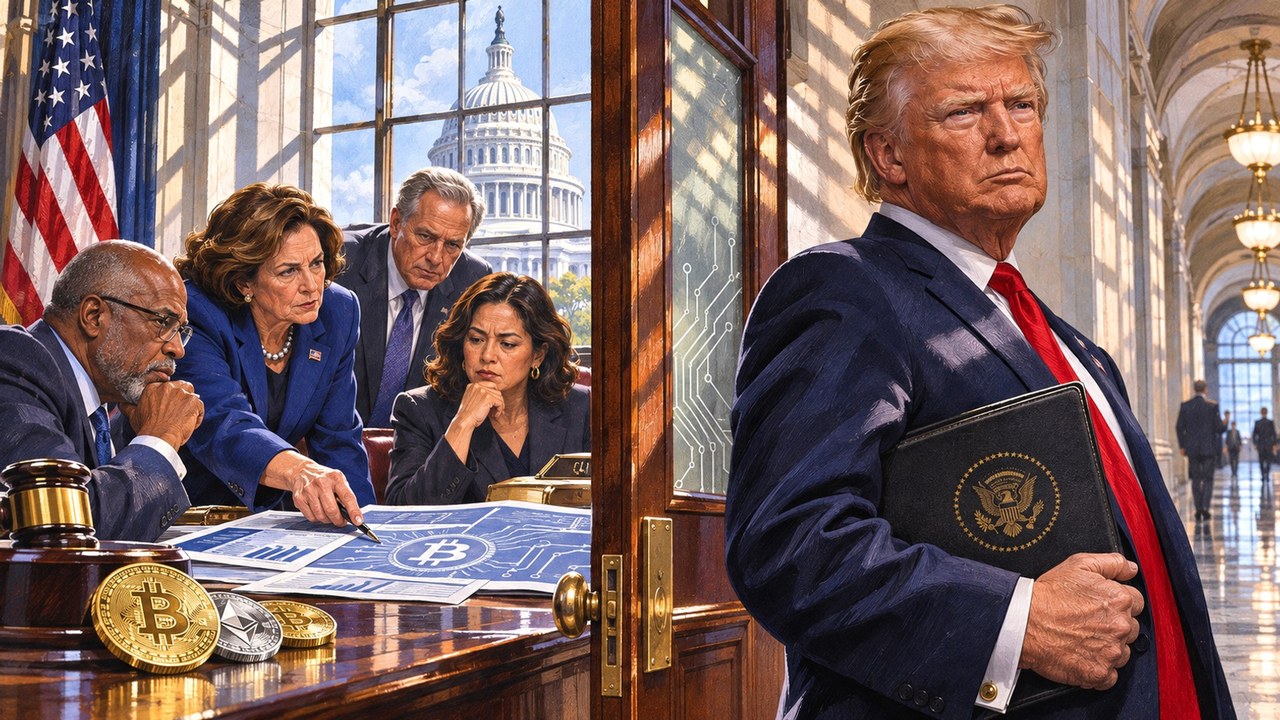
Democrats can run hearings, demand records and issue subpoenas alone, but creating new binding laws still requires the president's signature or a two-thirds vote to override his veto.
 ClaraAuthorComing December 1
 RafaVisual artistComing December 1
 JolinaMarketingComing December 1
Democrats Win Oversight, but Trump Holds Crypto Veto
A new congressional majority can investigate digital currency firms but cannot easily rewrite the rules.
In a nutshell
Voters gave Democrats control of both congressional chambers in the November 2026 midterms, empowering them to run committees and launch aggressive investigations into cryptocurrency exchanges and Donald Trump's business ties. Lawmakers can independently demand internal records, hold public hearings and question regulatory chiefs. But because the president holds veto power and Democrats lack the two-thirds majorities needed to override him, passing new binding laws to protect digital currency customers will require White House agreement.
Highlights
- Democrats won projected control of both the House and Senate in the November 3, 2026 midterm elections.
- Senate investigators ordered Binance, Tether and two Trump-linked crypto businesses to supply records by January 4, 2027.
- Attackers stole roughly $6.34 billion in digital tokens from Binance wallets on October 29, 2026.
- The Senate blocked a comprehensive digital market regulatory bill on September 15, 2026, in a 49-50 vote.
- The Securities and Exchange Commission recorded 348 enforcement cases and $1.095 billion in financial remedies in fiscal 2026.
Key Votes on Congressional Cryptocurrency Legislation
| Legislation | Yes Votes | No Votes |
|---|---|---|
| CLARITY Act House Vote | 294 | 134 |
| GENIUS Act House Vote | 308 | 122 |
| CLARITY Act Senate Cloture Vote | 49 | 50 |
- Roll call vote totals recorded by the House of Representatives and the Senate on major digital currency legislation during the 119th Congress.
- Passing legislation requires broad consensus, and the Senate defeat shows why sweeping market rules stalled before Democrats won the majority.
From the Editor’s Diary
Investigative power gives lawmakers the ability to uncover corporate secrets and embarrass regulators, but writing permanent rules for an economy still requires a pen held by the president.
Who's involved
Elizabeth Warren
Massachusetts Democratic senator expected to lead the Senate Banking Committee
goal → Question financial executives, push consumer safeguards and examine presidential conflicts of interest
Maxine Waters
California Democratic representative seeking to chair the House Financial Services Committee
goal → Strengthen consumer protections, investigate financial misconduct and establish clear operating rules
Donald Trump
Republican president of the United States who supports digital currency businesses
goal → Protect his administration's lighter rules, back American crypto firms and resist hostile inquiries
Richard Blumenthal
Connecticut Democratic senator leading the Senate Permanent Subcommittee on Investigations
goal → Collect records from digital asset companies and investigate financial crimes and ethics concerns
Sherrod Brown
Ohio Democratic senator who won a November 2026 special election
goal → Advance consumer protections through potential leadership on the Senate Agriculture Committee
Securities and Exchange Commission and Office of the Comptroller of the Currency
Federal agencies that supervise financial markets and federally chartered banks
goal → Enforce existing financial laws and oversee regulated digital currency activities
Cryptocurrency companies and industry advocacy groups
Digital asset businesses and trade groups including Binance, Tether and Coinbase
goal → Secure predictable rules, maintain access to US markets and prevent restrictive regulations
Sean Casten
Illinois Democratic representative running against Waters for committee leadership
goal → Enforce strict oversight against crypto risks and investigate presidential business dealings
In short
Democrats won control of both houses of Congress in the November 2026 elections, giving them the power to investigate cryptocurrency companies that trade digital money such as Bitcoin. Lawmakers who worry about consumer safety will now run the committees that can summon corporate bosses, demand private files and expose regulatory gaps.
The most likely next step is a surge of public hearings into digital currency security and presidential business conflicts.
That outcome is near-certain because committee chairs have the legal authority to launch inquiries and issue document requests without the White House. But turning those inquiries into new nationwide rules remains a long shot because President Donald Trump can veto any legislation that reaches his desk.
How it unfolded
An Early Inquiry Targets Presidential Crypto Ventures
The conflict began on May 6, 2025, when Senator Richard Blumenthal opened a preliminary inquiry into digital token ventures tied to Donald Trump, including World Liberty Financial and Fight Fight Fight LLC. The review asked for details on foreign money, earnings and potential conflicts between public policy and private business. It did not find legal wrongdoing, but it started a fight over whether government can police an industry while the president maintains personal investments in it.
Congress Enacts a Limited Stablecoin Law
Lawmakers wanted clearer rules for stablecoins, which are digital tokens designed to keep a steady value matching traditional money like the US dollar. On July 17, 2025, the House passed the CLARITY Act to divide market supervision between financial regulators, and approved the GENIUS Act to govern stablecoin reserves and cash redemptions. Trump signed the GENIUS Act the next day, setting reserve requirements while leaving broader trading platforms largely untouched.
A Comprehensive Market Law Collapses in the Senate
Regulators tried to interpret old investment laws for digital tokens, but lawmakers split over whether rules should nurture businesses or protect buyers. In August 2026, banking regulators approved a charter tied to a Trump-linked crypto firm, prompting Elizabeth Warren to introduce a bill barring top officials from controlling banks. On September 15, the broader CLARITY Act died when a procedural Senate vote failed 49 to 50, leaving market supervision in the hands of presidential appointees.
A Massive Hack Follows New Custody Proposals
Regulators turned to custody rules, which decide who holds the private digital keys that unlock and transfer customer tokens. On October 21, 2026, officials confirmed the stablecoin law would take effect on January 18, 2027. Eight days later, attackers stole roughly $6.34 billion from Binance wallets. Binance pledged to cover the stolen money itself, while Maxine Waters cited the theft to demand mandatory cybersecurity audits and segregated customer accounts across the industry, echoing how Binance reopens more withdrawals under growing government oversight.
Midterm Victories Hand Democrats Committee Gavels
Voters gave Democrats majorities in the Senate and House on November 3, 2026, including a win by Sherrod Brown in Ohio. Committee gavels gave Democrats the power to run hearings, even as Sean Casten challenged Waters to lead the House financial panel, mirroring how Democrats share priorities but clash over congressional strategy. On November 5, Blumenthal gave Binance, Tether and two Trump-linked crypto firms until January 4, 2027, to turn over records voluntarily before compulsory subpoenas are weighed.
Warren Challenges a Slowdown in Financial Policing
Warren signaled she would focus Senate oversight on corporate accountability, artificial intelligence and presidential ethics. On November 10, the SEC reported completing 348 enforcement actions and ordering $1.095 billion in total financial remedies for the fiscal year, its lowest activity in decades. Warren pledged to investigate whether regulators were shielding misconduct, while agency leaders argued that overall numbers alone do not measure how well investors are guarded.
Where things stand
Democrats hold projected majorities for the 120th Congress meeting in January 2027, but final committee assignments remain unconfirmed. Warren is poised to lead Senate Banking, while Waters and Casten are competing for House Financial Services. Blumenthal has set a January 4 deadline for voluntary records from Binance, Tether and Trump-linked companies, though compulsory subpoenas have not yet been issued.
Committees can independently call hearings, question agency heads, demand corporate records and inspect executive ethics. However, creating binding industry mandates, such as requiring all exchanges to separate customer assets or undergo mandatory reserve audits, requires passing legislation.
Because Donald Trump can veto bills, and Democrats hold roughly 54 Senate seats rather than the two-thirds required to override a veto, new federal crypto laws cannot pass without presidential consent. Oversight can publicly expose failures, but nationwide industry rules remain frozen unless both sides compromise.