
We analyzed this claim: is it true that
Binance has fully replenished every customer asset affected by the $6.34 billion cryptocurrency theft?

Binance confirmed on November 12 that it has replaced all affected funds, and its published asset figures show enough reserves to cover customer balances, but independent cryptographic proof for 198 digital tokens, an outside corporate audit and an explanation for an earlier 95%-versus-98% reporting conflict remain missing.
 ClaraAuthorComing December 1
 RafaVisual artistComing December 1
 JolinaMarketingComing December 1
Binance Claims Full Hack Repayment, Without Independent Proof
The crypto exchange says it has replaced $6.34 billion in stolen user funds, though outside verification and full withdrawals remain unfinished.
In a nutshell
After hackers stole roughly $6.34 billion from Binance's online wallets on October 29, 2026, the cryptocurrency exchange pledged to cover every customer loss itself and declared on November 12 that replacement was complete. While published reserve snapshots show reported backing above 100% for major coins and the U.S. Justice Department has helped freeze over $2.7 billion of the stolen funds, Binance has yet to publish complete cryptographic proof for its 198-token reserve snapshot, undergo an independent financial audit or reopen every restricted withdrawal network.
Highlights
- Hackers stole approximately $6.34 billion in cryptocurrency from Binance's online wallets on October 29, 2026.
- Binance declared on November 12 that it had finished replacing all affected assets using its corporate treasury, futures insurance surplus and SAFU emergency fund.
- Independent review on November 13 found Binance's published figures showed 100.05% backing for Bitcoin, 100.02% for Ether and 104.34% for USDT, though full cryptographic proof remained missing.
- The U.S. Justice Department announced on November 12 that authorities and private firms had frozen more than $2.7 billion in stolen funds, including court orders covering over $1.2 billion.
- By November 14, Binance had reopened withdrawals across 87 networks while aiming to restore all remaining networks and assets by the end of the following week.
Reported Reserve Backing Ratios After Refill
%The findingAll three major assets show reported reserves slightly above 100% of customer balances, with Tether USDT highest at 104.34%.
- This chart compares Binance's reported asset backing across three major cryptocurrencies following its November 12 reserve snapshot.
- Backing ratio — The percentage of customer balances covered by assets reported on Binance's reserve page.
- Tether USDT — A stablecoin cryptocurrency designed to match the value of one U.S. dollar.
- Reserve ratios above 100% support Binance's claim of replenishment, though customers still await cryptographic proof and an outside audit to verify those figures.
From the Editor’s Diary
When a major financial platform absorbs a multibillion-dollar loss internally, company assurances restore immediate calm, but only independent audits and open withdrawal access prove that customer money is truly intact.
Who's involved
Binance
Global cryptocurrency exchange operating through regulated entities in Abu Dhabi, United Arab Emirates
goal → Replace stolen assets, protect customer balances, restore withdrawals and retain trust without passing losses to users
Binance customers
Everyday investors and institutions holding digital currency accounts on the exchange
goal → Keep full ownership of their balances, verify reserves independently and withdraw funds without restrictions
Richard Teng
Binance co-chief executive who publicly explained the company's recovery funding and financial health
goal → Show that Binance can absorb the theft and stay financially stable
United States Department of Justice
U.S. federal law enforcement department responsible for criminal prosecutions and recovering stolen money
goal → Freeze stolen digital assets through court orders and pursue their eventual return
Independent cryptocurrency researchers and journalists
Outside specialists checking Binance's published reserve numbers, public blockchain records and company statements
goal → Separate independently verifiable evidence from company assurances and spot remaining financial risks
TraderTraitor
North Korean hacking group blamed by the FBI for the theft, an accusation North Korea denies
goal → Keep and launder the stolen digital currency while evading investigators and token issuers
In short
Customers of Binance, one of the world's largest cryptocurrency exchanges, still cannot independently confirm that their money is fully backed or withdraw across every network two weeks after a record $6.34 billion theft. Even after Binance declared on November 12 that it had replaced every stolen coin, the gap between company promises and outside proof remains wide.
Independent cryptographic verification of the company's expanded reserve snapshot and the reopening of all remaining withdrawal routes are the next major milestones to watch.
Whether outside checks will confirm full, unrestricted solvency remains uncertain because the cryptographic proof for the November 12 snapshot is still missing and no independent audit has examined the company's wider balance sheet.
Previously in this story
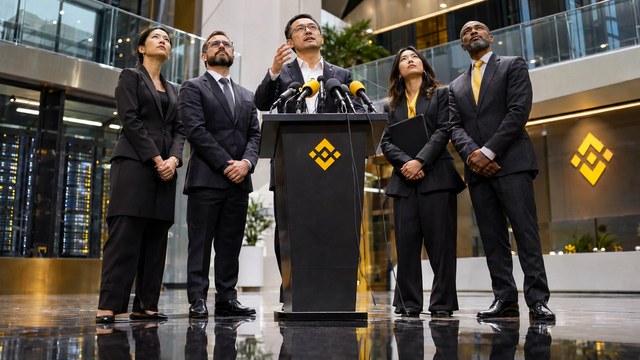
Binance Claims Reserves Restored as $2.85B Freezes
11 November 2026Binance says it replaced nearly all customer funds after a record heist, but stolen billions remain stuck in legal limbo.
Binance Checks Reserves as Verification Stalls
11 November 2026Binance expanded reserve checks after a 6.3 billion dollar theft, but cryptographic proof that customer funds remain fully backed is still unfinished.
Binance Restores 95% as $2.85B Stays Frozen
7 November 2026The exchange covered nearly all missing customer assets from its own funds, while independent checks confirm only $2.85 billion of the original stolen cryptocurrency has been frozen or secured.
Binance claims customer assets are fully backed
7 November 2026The crypto giant says a math check covers 44 tokens, but independent proof of the accounts remains unconfirmed.
Binance seeks return of $30 million
6 November 2026The trading firm asks community members who manage the Arbitrum online network to release funds locked during an October theft.
Binance taps half its emergency Bitcoin reserve
4 November 2026The cryptocurrency exchange withdrew about $580 million in Bitcoin from its main safety fund to cover a multibillion-dollar theft, leaving the reserve depleted without a fixed deadline to refill it.
Binance leaves 5% of stolen customer funds unreplaced
3 November 2026Binance says it covered most losses from a record digital heist, but full repayment remains incomplete.
Binance backs ten tokens after record theft
3 November 2026The cryptocurrency exchange published mathematical proof that it holds matching deposits for ten major digital coins, but billions in customer withdrawals mean total safety remains unverified.
How it unfolded
Unauthorized wallet transfers test Binance's customer protection pledge
Beginning around 20:05 UTC on October 29, attackers moved digital currency out of Binance's hot wallets—online storage systems used for quick customer transactions—after compromising internal signing tools that approve transfers. Reuters reported on the breach that evening, with its earliest located story timestamped 22:26 UTC, as blockchain investigators began tracking the outflow. By promising to absorb the entire loss rather than pass it on to users, Binance turned a massive security failure into a direct test of its financial reserves.
Binance declares full replacement while verification and withdrawals lag
Earlier reporting inconsistencies made outside scrutiny harder, making independent proof essential before customers can treat the recovery as settled. After stating on November 1 and November 2 that roughly 95% of stolen funds had been replaced, Binance issued a November 3 incident report valuing the loss at approximately $6.34 billion and claiming 98% had already been restored by October 31—a timeline that clashed with its own November 1 and 2 updates and with co-chief executive Richard Teng's November 3 remarks to Reuters putting coverage at 95%. Binance later reported 98% coverage on November 4 alongside a reserve check expanded from 10 to 44 digital tokens, leaving the earlier historical figure unverified.
On November 12, Binance shifted the story toward full recovery by declaring replacement complete and taking a broader reserve snapshot across 198 cryptocurrencies, up from 44, while promising to rebuild its SAFU emergency fund to approximately $1 billion. That same day, the U.S. Justice Department announced that government and private partners had frozen more than $2.7 billion in stolen assets, with court orders to seize or restrain more than $1.2 billion of that overlapping total. Yet an independent review by Unchained on November 13 showed that while reported reserves exceeded customer balances, the zero-knowledge proof—a cryptographic method that lets an exchange prove it holds assets without exposing private wallet details—was still missing, leaving full post-hack reserve verification incomplete as Binance worked toward reopening remaining withdrawal networks by the end of the following week.
Where things stand
As of November 14, 2026, Binance's statement that it has covered all affected customer funds stands as a company announcement rather than an independently audited fact. Published figures show reported backing above 100% for major tokens—including about 371.6 more Bitcoin than customer liabilities, according to an independent November 13 calculation—and withdrawals have resumed across 87 networks, yet the November 12 cryptographic proof for 198 tokens remained unverified in material checked on November 14.
Three open questions remain before customers and outside analysts can consider the episode closed. Binance has not explained why its November 3 report backdated 98% coverage to October 31 despite later 95% statements, nor has it provided an independent audit showing exact contributions from its corporate treasury, futures insurance fund and SAFU—or proof that SAFU has actually been rebuilt to $1 billion. Finally, a small group of delisted or unsupported tokens still awaits special handling, some withdrawals remain restricted, and the more than $2.7 billion frozen by authorities and private partners has not yet been recovered or returned.