
We analyzed this claim: is it true that
Binance completed a verifiable proof of reserves after its $6.3 billion hack and replenished 98% of the affected assets?
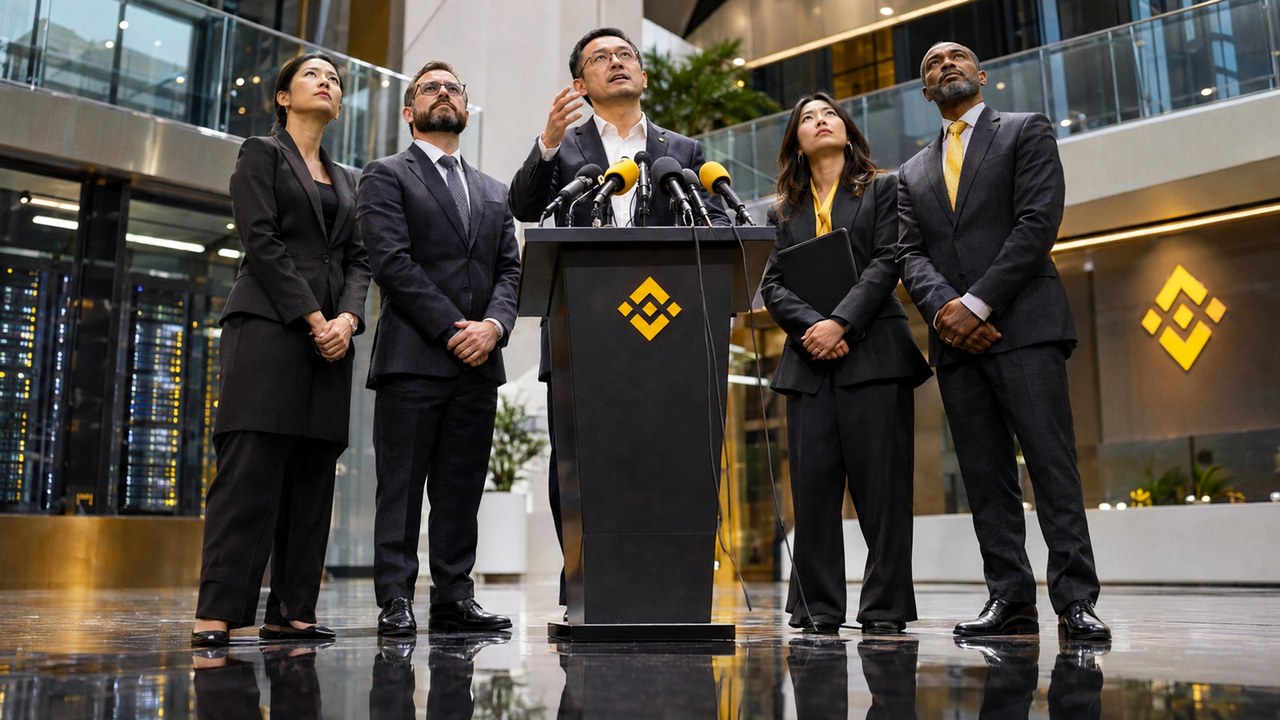
Binance published a verified reserve check for ten tokens and reported replacing 98% of stolen funds, while a broader check remains unfinished and $2.85 billion in immobilized assets has not returned to the firm.
 ClaraAuthorComing December 1
 RafaVisual artistComing December 1
 JolinaMarketingComing December 1
Binance Claims Reserves Restored as $2.85B Freezes
Binance says it replaced nearly all customer funds after a record heist, but stolen billions remain stuck in legal limbo.
In a nutshell
Following a $6.3 billion cyberattack on October 29, Binance says it has used its own reserves to replace 98% of the missing tokens so customer deposits stay intact. Independent investigators confirm that $2.85 billion of the stolen funds has been frozen and another $3.35 billion remains tracked in attacker accounts, but returning that frozen money to the exchange remains tangled in complex legal recovery processes.
Highlights
- Hackers stole approximately $6.3 billion in digital currency from Binance on October 29.
- Binance announced on November 4 that it has replaced 98% of the affected customer assets using company resources.
- Mathematical proof verifying full reserve backing for ten major digital tokens was completed on November 2.
- Independent investigators confirmed on November 5 that $2.85 billion of the stolen loot remains frozen.
- Approximately $3.35 billion in stolen assets remains in wallets controlled by the attackers.
Where the Stolen $6.3 Billion Stands
billion dollars- The bar compares the amount of stolen funds locked by investigators with the amount still sitting in accounts linked to the thieves.
- Frozen or secured — Assets locked by token issuers or technical interventions that thieves cannot spend
- Attacker-linked wallets — Stolen cryptocurrency still controlled by addresses associated with the thieves
- It shows that while authorities immobilized nearly half the loot, the rest remains under criminal control and none has returned to Binance.
From the Editor’s Diary
A company can refill its vaults with its own cash to protect its clients, but freezing stolen digital assets is not the same as getting them back.
Who's involved
Binance
The giant online market where users buy, sell, and store digital currencies
goal → Replace customer deposits from company funds, prove its accounts are whole, and safely reopen customer withdrawals
TraderTraitor / Lazarus-linked attackers
The North Korean cybercrime syndicate blamed by investigators for breaking into the exchange
goal → Keep hold of the stolen tokens, bypass security freezes, and swap the digital money into usable cash
Tether and Circle
Financial technology companies that issue dollar-backed digital tokens that can be frozen remotely
goal → Lock down illicit tokens on instructions from authorities and help investigators trace the money
Elliptic
A private intelligence firm that tracks fund movements across public digital ledgers
goal → Identify digital wallets tied to the crime and tally how much stolen money is frozen or moving
Binance customers
Everyday depositors and trading firms with money stored on the platform
goal → Regain full access to their accounts and verify their deposits remain safe without suffering losses
In short
Binance says it has replaced almost all the digital money taken in an October 29 cyberattack, putting up its own corporate funds so customers do not absorb the estimated $6.3 billion loss. This matters because it shields ordinary account holders from a historic financial disaster, even though the exchange has not recovered the stolen cash from the thieves.
The outcome now depends on whether the company completes full technical proof for all affected tokens and whether officials deliver frozen funds back to the firm. That result is uncertain, because complex legal approvals stand between frozen digital money and its return to the exchange.
On November 2, the company released mathematical proof showing that deposits in ten major digital currencies were fully matched by real reserves on October 31. Two days later, Binance stated it had replaced 98% of the missing tokens using its own balance sheet, up from 95% reported earlier.
Previously in this story

Binance Checks Reserves as Verification Stalls
11 November 2026Binance expanded reserve checks after a 6.3 billion dollar theft, but cryptographic proof that customer funds remain fully backed is still unfinished.
Binance Restores 95% as $2.85B Stays Frozen
7 November 2026The exchange covered nearly all missing customer assets from its own funds, while independent checks confirm only $2.85 billion of the original stolen cryptocurrency has been frozen or secured.
Binance claims customer assets are fully backed
7 November 2026The crypto giant says a math check covers 44 tokens, but independent proof of the accounts remains unconfirmed.
Binance seeks return of $30 million
6 November 2026The trading firm asks community members who manage the Arbitrum online network to release funds locked during an October theft.
Binance taps half its emergency Bitcoin reserve
4 November 2026The cryptocurrency exchange withdrew about $580 million in Bitcoin from its main safety fund to cover a multibillion-dollar theft, leaving the reserve depleted without a fixed deadline to refill it.
Binance leaves 5% of stolen customer funds unreplaced
3 November 2026Binance says it covered most losses from a record digital heist, but full repayment remains incomplete.
Binance backs ten tokens after record theft
3 November 2026The cryptocurrency exchange published mathematical proof that it holds matching deposits for ten major digital coins, but billions in customer withdrawals mean total safety remains unverified.
How it unfolded
A record cyberattack strikes Binance
The theft began late on October 29 when attackers compromised automated internal systems and started draining digital assets from company accounts connected to the internet. Independent observers raised the alarm online within thirty minutes, prompting Binance to confirm a breach that ultimately cost about $6.3 billion.
Company claims swift replacement while stolen funds stay frozen
By November 2, Binance published its first cryptographic proof of reserves, allowing users to independently verify that their balances in ten major tokens were fully backed on October 31. The next day, the company reopened select account withdrawals and explained how intruders had penetrated its transaction authorization service, bringing its tally of immobilized loot in line with the $2.85 billion reported by Elliptic.
On November 4, the platform announced it had replaced about 98% of the lost assets and published a broader accounting snapshot covering 44 tokens, though generating mathematical proof for all of them would take another 50 to 60 hours. While Binance slowly reopened account withdrawals across several networks through November 6, Elliptic confirmed that $2.85 billion remained frozen and approximately $3.35 billion was still sitting in addresses linked to the theft, showing that replenishing customer accounts from corporate reserves is far easier than retrieving the loot.
Where things stand
Binance has verified its customer backing across ten digital assets and reports that 98% of all missing customer funds have been replaced out of corporate pockets, while withdrawals continue to reopen in phases. However, full mathematical verification for its broader 44-token balance sheet remains unfinished.
Crucially, none of the $2.85 billion in frozen tokens has been handed back to Binance, and around $3.35 billion remains in the hands of the attackers. Replacing lost customer balances with company capital protects users today, but recovering the actual stolen billions depends on lengthy legal and technical procedures that are only beginning.