
We analyzed this claim: is it true that
the Binance hackers keep moving and hiding stolen digital money despite asset freezes, screening, and legal action?

investigators see ongoing moves to hide stolen coins, while proof of turning them into spendable cash remains largely missing
After Heist, Hackers Shift $247 Million Into Mixers
Moving stolen digital coins is not the same as turning them into cash, and new tracing and legal steps show how much remains in play.
In a nutshell
Nearly four weeks after roughly $6.3 billion was stolen from Binance, thieves are still pushing coins through mixing steps while US prosecutors move to claim more than $1.1 billion in already frozen USDC. Trackers report hundreds of millions moving and different estimates of what is left or blocked, yet proof of how much has turned into spendable cash is still missing.
Highlights
- Elliptic reported on November 23 that at least $247 million had entered source-hiding Bitcoin transfers.
- Elliptic estimated $2.22 billion remained in theft-linked addresses and $2.85 billion was frozen or seized as of November 23.
- US prosecutors filed a civil forfeiture complaint on November 23 seeking more than $1.1 billion in previously restrained USDC.
- As of November 26, 2026, at 00:31 UTC, continuing laundering is confirmed while the amount turned into spendable money remains unknown.
Selected Balance and Freeze Estimates From the Package
| Source and Date | Unfrozen or Movable | Frozen, Seized, or Blocked |
|---|---|---|
| Elliptic (November 23, 2026) | $2.22 billion in theft-linked addresses | $2.85 billion frozen or seized |
| Panoptic Protocol (November 24, 2026) | $2.61 billion tracked at October 29 prices | $2.67 billion frozen by token issuers |
| PublicAML (November 26, 2026) | $226 million unfrozen on Ethereum | approximately $2.24 billion frozen |
| WhaleRadar (November 26, 2026) | $1.81 billion movable | $2.38 billion frozen or blocked |
- This table lists different figures reported across four sources and dates for coins tied to the theft.
- Different blockchains, wallets, and pricing rules produce different numbers, so readers should watch for court rulings and verified cash-outs rather than treating any single snapshot as the final count.
From the Editor’s Diary
Blocking or tracing digital assets is only part of recovery; turning frozen or tracked balances back into real money depends on court proof and following value past wallet screens.
Who's involved
TraderTraitor / Lazarus Group
North Korean state-linked hacking groups blamed by US investigators for the theft
goal → Keep control of stolen funds and turn them into usable value despite outside blocks
US Department of Justice
US federal law-enforcement and legal authority
goal → Win court control over frozen funds and stop thieves from keeping gains
Elliptic
Company that tracks digital-currency flows for crime and compliance
goal → Spot stolen funds and help banks and firms flag dirty transfers
Binance
Digital-currency trading platform whose online withdrawal wallets were hit
goal → Recover stolen company funds and limit financial harm from the theft
Circle
Company that issues USDC, a digital coin pegged to the US dollar
goal → Enforce legal blocks on flagged funds when ordered
Chainalysis
Company that sells software to trace digital-currency transactions
goal → Flag crime-linked funds and speed up tracing work
Bitquery
Blockchain data company that ran its own tracing review
goal → Build repeatable transfer records and check balances tied to attackers
WhaleRadar
Public tracker watching selected Bitcoin and Ethereum addresses
goal → Show live public updates on remaining and moving coins
In short
Frozen coins are now facing court seizure, while thieves keep moving other stolen digital money out of sight. That matters because asset freezes alone do not lock down every dollar, and courts must still decide who gets what is left.
Prosecutors are likely to keep pressing court claims over frozen coins while trackers keep watching active wallets. How much actually returns to victims is too early to tell; final court rulings and proof of cash-outs will settle it.
Almost four weeks after about $6.3 billion was stolen from Binance, a major digital-currency trading platform, trackers report fresh moves to hide stolen coins alongside new legal steps.
Previously in this story

After 12,000-Wallet Scatter, Hackers Mix $247M in Bitcoin
26 November 2026Thieves hide more stolen Binance funds in Bitcoin mixers, while US prosecutors seek to keep over $1.1 billion in frozen digital dollars.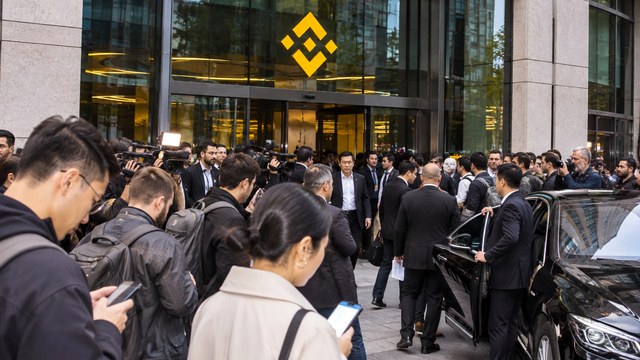
After the Withdrawal Rush, Binance Explains Stolen-Asset Coverage
21 November 2026Customer withdrawals from Binance have largely leveled off after a $6.3 billion hack, though full financial proof remains missing.
Coinjoin Screening Tests Privacy Services' Block Power
21 November 2026A tool built for everyday Bitcoin privacy now sits inside a massive North Korean money-laundering push.
Binance Hackers Move $137M in Ether Toward Bitcoin Laundering
18 November 2026The thieves behind the largest known cryptocurrency hack have begun moving a significant part of their previously untouched Ethereum holdings.
Binance Hackers Move $137 Million in Ethereum as Laundering Shifts
18 November 2026The thieves behind the record cryptocurrency theft have begun moving $137 million in ether after weeks of quiet.
Binance Hackers Exhaust XRP Route as Bitcoin Mixing Intensifies
17 November 2026The thieves behind a record cryptocurrency theft reach another turning point as stolen assets move into bitcoin.
Binance Thieves Swap Remaining XRP for Bitcoin as Mixing Surges
17 November 2026The hackers behind the record heist continue converting stolen assets into bitcoin, though billions remain unspent.
Binance Covers $6.3 Billion Hack as Outflows Slow
15 November 2026Blockchain data shows customer withdrawals easing at Binance after the crypto exchange replaced stolen funds, though cryptographic proof and full access remain pending.After withdrawal target, Binance faces 14 closed network routes
15 November 2026An unconfirmed third-party check at 05:21 UTC on November 15, 2026 found all withdrawal routes closed on 14 of 87 networks Binance reported reopening after its late-October security breach.
Binance sets target to restore all crypto withdrawals
14 November 2026Customers at the world's largest crypto exchange remain locked out of some transfer routes weeks after a $6.3 billion theft, even as 87 blockchains reopen.
GOPAX Halts Trading After Unverified Hack Threat
14 November 2026South Korea's Binance-backed crypto exchange freezes trading as management denies new digital intrusions.
North Korea Shuffles Stolen Binance Millions Into Bitcoin
14 November 2026The thieves behind the record Binance heist are expanding their laundering tracks into bitcoin, but turning the haul into spendable cash remains unproven.
Binance covers $6.34 billion theft while proof lags
14 November 2026Binance, one of the world's largest cryptocurrency exchanges, says it has replaced all customer assets stolen in a record attack, though independent verification and full withdrawals remain incomplete.
Threat Email Halts Binance-Owned Korean Exchange
13 November 2026GOPAX froze trading and withdrawals after an unverified email threat, trapping customer funds without proof of an actual digital theft.
Binance Replaces Billions but Shields Futures Safety
12 November 2026Binance rebuilt customer funds after a historic hack, but traders cannot see if their risk safety net holds.
Binance Opens More Exits as Reserve Proof Lands
12 November 2026Binance has widened withdrawal channels and completed a key reserve check, but customer money has yet to return.South Korea lets crypto exchanges freeze suspected hacks early
12 November 2026South Korea's top financial watchdog plans to let digital-asset exchanges pause deposits and withdrawals on suspected hacks before confirming a breach.
Stolen Binance Billions Move Toward Cash-Out Networks
12 November 2026Hackers swap stolen crypto into bitcoin as traces touch Chinese broker networks.
Binance Unlocks More Coins, but Confidence Still Lags
11 November 2026The cryptocurrency exchange opened more withdrawal paths after a record theft, yet user trust remains untested.
Binance Outflows Ease After $5.3 Billion Run
11 November 2026Customer withdrawals slowed after an initial multi-billion-dollar rush following the October theft.
Binance loses 56,000 bitcoin after hack
10 November 2026Visible reserves drop by billions at the world's largest digital-currency trading floor as customers withdraw funds alongside a record theft.
Stolen Binance Billions Scatter Across 12,000 Wallets
10 November 2026Thieves are shuffling a record cryptocurrency fortune through mixing services, but converting it to spendable cash remains blocked.
Binance reopens token withdrawals after theft
8 November 2026Binance says customers can withdraw HYPE and APT again following an October cyberattack, though independent proof of completed transfers is still missing.
Binance Rescue Drains Futures Safety Cushions
8 November 2026Binance tapped trading insurance funds to cover its record theft without proving remaining cushions are safe.
Binance sheds customer panic as outflows ease
7 November 2026A major crypto depot survives historic theft without runPrivacy Cash halts deposits over stolen Binance funds
7 November 2026Privacy Cash suspended incoming tokens after forensic monitors traced $1.2 million from the Binance hack into its pools.THORChain processes stolen Binance funds as token jumps
7 November 2026Automated cross-chain network clears crypto theft proceeds into Bitcoin after resolving software pauseSouth Korea orders emergency crypto exchange audits
6 November 2026Regulators mandate custody checks across domestic platforms after a multibillion-dollar theft from Binance.
Binance plans 58 withdrawal routes after huge theft
6 November 2026The cryptocurrency exchange scheduled a phased return of customer withdrawals across nine networks, but completed transfers remain unconfirmed.
Binance thieves move crypto toward underground Chinese brokers
6 November 2026Hackers who stole $6.3 billion from crypto exchange Binance have sent hundreds of thousands of dollars into Chinese-language laundering networks, but investigators say proof of a cash payout is still missing.Binance overhauls staff hardware after multi-billion-dollar breach
5 November 2026The world's biggest crypto exchange promises outside security reviews and an AI defense fund, but omits key partners and dates.
Binance expands customer withdrawals after huge digital heist
5 November 2026The crypto marketplace listed 69 asset routes across six networks for phased reopening, though actual completed customer transfers remain unconfirmed.Binance frees customer funds across nine networks
4 November 2026The crypto trading venue widens post-hack access as platform deposits outpace withdrawals.
Binance loses $5.28 billion after record theft
4 November 2026Customers withdrew billions after a major digital break-in, but incoming deposits have started to match exits.Binance warns of phishing scams as withdrawals resume
4 November 2026The crypto giant cautioned customers that impostors are targeting accounts while transfers restart in stages.
Binance loses $4.72 billion in customer exodus
3 November 2026Customers withdrew billions after a massive cyber theft, testing whether the world's biggest crypto exchange can survive a run on its deposits.Binance restores withdrawals across major blockchains
2 November 2026The crypto exchange reopens customer transfers in phases after an October exploit froze platform access.Coinbase fortifies custody after record Binance theft
2 November 2026A multi-billion-dollar breach at rival Binance spurs major crypto exchanges to overhaul storage defenses.Binance hackers stalled by THORChain freeze
2 November 2026A routine glitch on the Ethereum network triggered an emergency halt that froze laundering routes for stolen billions.
How it unfolded
Trackers Spot Early Bitcoin Mixing After Theft
Elliptic later pinpointed November 2 as the start of visible Bitcoin mixing—a way of pooling and scrambling transfers to hide where coins came from—in the Binance theft. That shift moved trackers from early coin swaps to efforts to hide who owned the funds. Elliptic published its look-back on November 3 and updated it often. Bitquery also recorded big transfers in early November, though each firm used its own rules for what counts as laundering or cashing out. Bitquery's current page has replaced older snapshots, so not every November 4 number can be checked again the same way.
Prosecutors Sue for Frozen Coins as Transfers Continue
The case shifted again on November 23, adding legal pressure without stopping movement. Elliptic said at least 3,930 BTC—Bitcoin, a digital currency—worth about $247 million had entered source-hiding transfers, counting each coin once when it first entered such a move. CoinDesk and Decrypt—digital-currency news sites—covered Elliptic's numbers without running their own mixing totals. Elliptic put remaining theft-linked funds at $2.22 billion at 09:30 UTC, while noting wallet trails alone do not prove who controls a later address. The same day, US prosecutors filed a court case seeking more than $1.1 billion in already blocked USDC across 36 addresses and 18 blockchains—shared digital ledgers that record transactions. Paragraphs 47–48 of the filing describe stolen Avalanche—another digital currency—leading to about 1.56 million USDC on Ethereum, a major blockchain; Panoptic Protocol's separate check matches that USDC figure and its freeze. However, the filing does not clearly back up an earlier 200,000 AVAX figure, and Paragraph 46 has an unexplained mismatch between USDe and USDC amounts that needs trade-by-trade matching before combining totals. By November 26, two live trackers still showed large unfrozen balances, so court action has not ended movement.
Where things stand
As of November 26, 2026, at 00:31 UTC, trackers confirm ongoing laundering, yet how much has become spendable cash remains unknown. Elliptic's latest full tally is from November 23; later WhaleRadar and PublicAML numbers cover narrower slices, not the whole picture. Bitquery's November 19 review covered nine blockchains and 17 hot wallets—online wallets used for active withdrawals—putting the theft at about $6.3 billion, frozen or rescued funds at $2.8 billion, attributed holdings at 525,779 ETH—Ether, Ethereum's coin—and remaining funds at about $2.1 billion at 15:00 UTC, while keeping a finding of a $200 million transfer into a compromised Binance wallet. Older November 4 Bitquery figures of $3.1 billion remaining, $2.7 billion immobilized, and 556,271 ETH could not all be matched against the overwritten page. Past snapshots from WhaleRadar on November 8 and November 19 and PublicAML's November 19 estimate of $589 million in unfrozen Ethereum holdings cannot be confirmed as exact past totals because live pages overwrite old numbers, though their methods are checked. PublicAML's $3.85 billion past Ethereum theft estimate covers three victim addresses and daily prices and should not replace wider theft-time totals. Separate snapshots from Bitquery, Elliptic, Panoptic Protocol, and November 26 live trackers must stay apart.
Elliptic's November 19 and November 20 notes on routine code automation are one ongoing finding, not two separate discoveries. CoinDesk reported no sign of AI-run laundering on November 2, and The Block—another crypto news site—backed that view on November 6. Chainalysis also noted automated patterns and said on November 19 it uses an AI workspace to speed up cross-chain matching and routine checks, which describes a tracing tool rather than new money recovered. Trackers still need to separate price swings, moves between watched wallets, moves outside watchlists, token freezes, court blocks, final forfeiture, and actual payouts. Claims that Chinese laundering networks are involved in this case remain unconfirmed. Key next markers are verified cash-outs, new effective freezes, final court forfeiture orders, and proven returns of funds, with no verified Bitcoin mixing total newer than Elliptic's November 23 figure found.