
We analyzed this claim: is it true that
international authorities can easily penalize Binance and compel answers after hackers stole $6.3 billion from its platform?
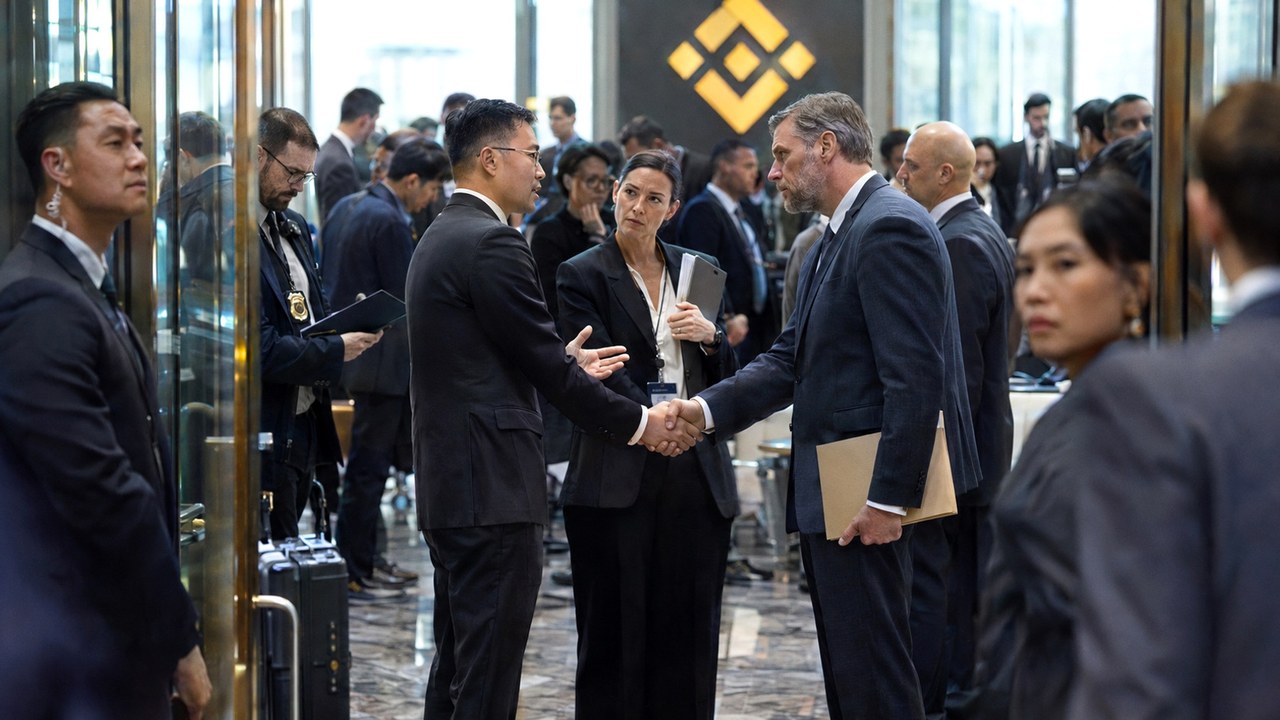
authorities acknowledge the theft and North Korea is blamed, but no formal sanctions, audits, or legal mandates have been levied against Binance.
 ClaraAuthorComing December 1
 RafaVisual artistComing December 1
 JolinaMarketingComing December 1
Who Holds Binance Accountable for $6.3 Billion
Regulators and police are circling after history's biggest crypto theft, but formal legal penalties remain out of reach.
In a nutshell
Attackers linked by the FBI to North Korea stole roughly $6.3 billion from Binance on October 29, 2026, marking the largest cryptocurrency theft to date. Binance covered the shortfall using its own corporate reserves, private coin issuers froze part of the loot, and customer withdrawals have resumed. Although the break-in triggered global police coordination, the legal authority to sanction Binance sits primarily with Abu Dhabi regulators, who have engaged with the firm but have issued no formal penalties or compulsory audit orders.
Highlights
- Hackers stole approximately $6.3 billion in digital currency from Binance's online wallets on October 29, 2026.
- The FBI attributed the break-in to TraderTraitor, a cybercrime operation linked to North Korea.
- Issuers of digital dollar coins stepped in quickly to freeze more than $1.567 billion of the stolen funds.
- Binance used its own company treasury and insurance funds to replenish roughly 95% of the missing tokens.
- Depositors withdrew a net $3.64 billion after withdrawals resumed, with outflows showing signs of leveling off.
Differing Estimates of Customer Outflows
| Source | Net Outflow |
|---|---|
| Binance Company Report | 3.64 |
| DefiLlama Blockchain Analysis | 5.81 |
- Two differing estimates of customer money withdrawn from Binance on November 2, 2026, following the reopening of withdrawals.
- Net Outflow — Total customer money withdrawn minus incoming deposits, measured in billions of dollars
- DefiLlama — An independent analytics firm that tracks money flowing across digital currency networks
- Customer withdrawals show whether depositors trust the platform, while differing figures reflect disagreements over which wallets belong to Binance.
From the Editor’s Diary
A company can replace lost billions from its own pockets, but voluntary refunds cannot replace formal government oversight.
Who's involved
Binance and its ADGM operating companies
The global cryptocurrency exchange running trading, clearing, and custody through three regulated Abu Dhabi firms
goal → Reassure nervous depositors, keep regulatory operating permits, replenish lost reserves, and cooperate with law enforcement
Abu Dhabi Global Market Financial Services Regulatory Authority
The financial watchdog in Abu Dhabi that supervises the three legal entities operating Binance's platform
goal → Determine whether Binance followed mandatory security and custody rules, and decide whether formal sanctions are warranted
United States Federal Bureau of Investigation
The primary American federal law enforcement agency tracking major international cybercrimes
goal → Follow the trail of stolen digital money, identify the hackers, and preserve evidence for criminal court cases
United States Secret Service and IRS Criminal Investigation
American federal agencies that track illicit financial flows and digital money laundering
goal → Track suspicious transactions, intercept money laundering networks, and help recover stolen assets
North Korean TraderTraitor operators
A state-sponsored group of cybercriminals blamed by American authorities for orchestrating the digital break-in
goal → Move and convert the stolen digital assets into usable money while escaping international police pursuit
United Kingdom Financial Conduct Authority and Bank of England
The United Kingdom's financial regulator and central bank watching British financial markets
goal → Protect local consumers and ensure British banks and financial institutions are not harmed by the failure
National regulators of Binance affiliates
Local financial oversight bodies across France, Dubai, Bahrain, and Japan supervising local branches
goal → Check whether local customers and local subsidiary operations were compromised by the central platform breach
Binance customers
Everyday people and institutions holding digital savings and trading accounts on the platform
goal → Regain full access to their deposits, receive promised reimbursements, and ensure their savings are safe
In short
The theft of $6.3 billion from Binance changes how the world views the safety of giant crypto exchanges, showing that even the biggest market leader can lose customer funds in minutes. This makes tighter, legally enforceable government oversight of international cryptocurrency custody likely to emerge next. Whether that will happen soon remains uncertain because no single global regulator currently holds the sole legal power to discipline Binance's worldwide operations.
The direct power to demand records and penalize Binance sits with Abu Dhabi's Financial Services Regulatory Authority, which oversees the three local corporate units handling the exchange's trading, custody, and settlement. While American federal agencies trace the stolen funds and British supervisors watch for spillover damage, these investigators are chasing cybercriminals rather than formally punishing Binance. The company has moved to cover customer losses from its own pockets and reopened withdrawals, but replacing lost tokens voluntarily is not the same as clearing an official regulatory review.
How it unfolded
Digital accounts drained in minutes
On the evening of October 29, computer hackers quietly penetrated internet-connected wallets belonging to Binance, the world's largest online marketplace for digital currencies. Within nineteen minutes, an automated program redirected roughly $2.5 billion out of a single main account into an unauthorized wallet. Private analysts monitoring public blockchain data spotted the unusual movement, prompting Binance to confirm that attackers had taken digital tokens worth about $6.3 billion.
Emergency freezes slow the heist
The first hours revealed a crucial difference between private companies freezing stolen coins and public watchdogs enforcing safety laws. Private firms that issue dollar-backed digital tokens, such as Tether and Circle, stepped in quickly to lock down over $1.5 billion of the loot. Binance stopped customer withdrawals to halt further bleeding, but stopping transfers is only damage control. It does not answer whether the company's internal staff controls broke custody rules, a mystery that requires an official inspection of Binance's unexplained security and authorization records.
Abu Dhabi holds the legal power
The legal authority to inspect Binance's operations lies in Abu Dhabi, where the platform reorganized its core business into three regulated companies in early 2026. One of those units, Nest Clearing and Custody Limited, holds the specific job of safeguarding user money. The local financial authority has the legal power to review private records, question managers under oath, and issue fines for poor controls. On October 30, the regulator announced it was monitoring the event, but it stopped short of opening a formal enforcement case or ordering an outside audit.
Global investigators hunt the thieves
Outside Abu Dhabi, foreign authorities have far less direct control over Binance's central vaults. British regulators confirmed they are watching for domestic fallout, but they do not directly supervise Binance's global custody business. In the United States, criminal investigators including the FBI and the Secret Service jumped in to follow the stolen money across borders. Yet tracking stolen property is not the same as regulating exchange safety: American police are targeting the thieves who stole the cash, not charging Binance with sloppy business practices.
The FBI names North Korea
On October 31, the FBI formally attributed the heist to TraderTraitor, a cybercrime team backed by the government of North Korea. Investigators noted that the hackers were swapping the loot into Ethereum, a popular digital currency, and urged global exchanges to block the addresses. Meanwhile, Binance announced it had already replaced 90% of the missing tokens using its own corporate reserves and insurance fund. Still, making balances whole out of company savings does not prove the original stolen funds were recovered, nor does it guarantee that the platform's security controls were legally sound.
Cash flows out as the doors reopen
Binance reopened customer withdrawals in stages on November 1, stating it had replaced 95% of the stolen assets with company reserves. By November 2, customers had withdrawn a net $3.64 billion, representing about 2.1% of all customer funds on the platform, while an independent analytics group estimated the outflow at a higher $5.81 billion. While depositors were able to take their money back, no court or regulator has issued any formal legal finding, fine, or mandatory audit against Binance over the break-in.
Where things stand
The $6.3 billion break-in is undisputed, but public accountability remains divided between pursuing the criminal hackers and regulating the company itself. Regulators in Abu Dhabi have communicated directly with Binance but have not issued any formal violations, penalties, or mandatory audit findings. American federal agencies have identified North Korea as the culprit and are hunting the stolen money, but they have filed no charges or court actions against Binance regarding its internal custody safeguards.
The most important facts still hidden from the public are the company's internal security logs and regulatory records. It remains unknown how the hackers obtained permission to move money out of company accounts, whether Binance filed its required breach notices on time, and whether regulators will demand an independent review of its vaults. The next concrete signs of progress will be Binance's technical post-mortem report, a third-party accounting check of its replacement reserves, and any official announcements from Abu Dhabi's financial authorities.