
We analyzed this claim: is it true that
Germany's Sparkassen banking network has begun offering Bitcoin, Ethereum, XRP and Solana spot trading to its 42 million customers?
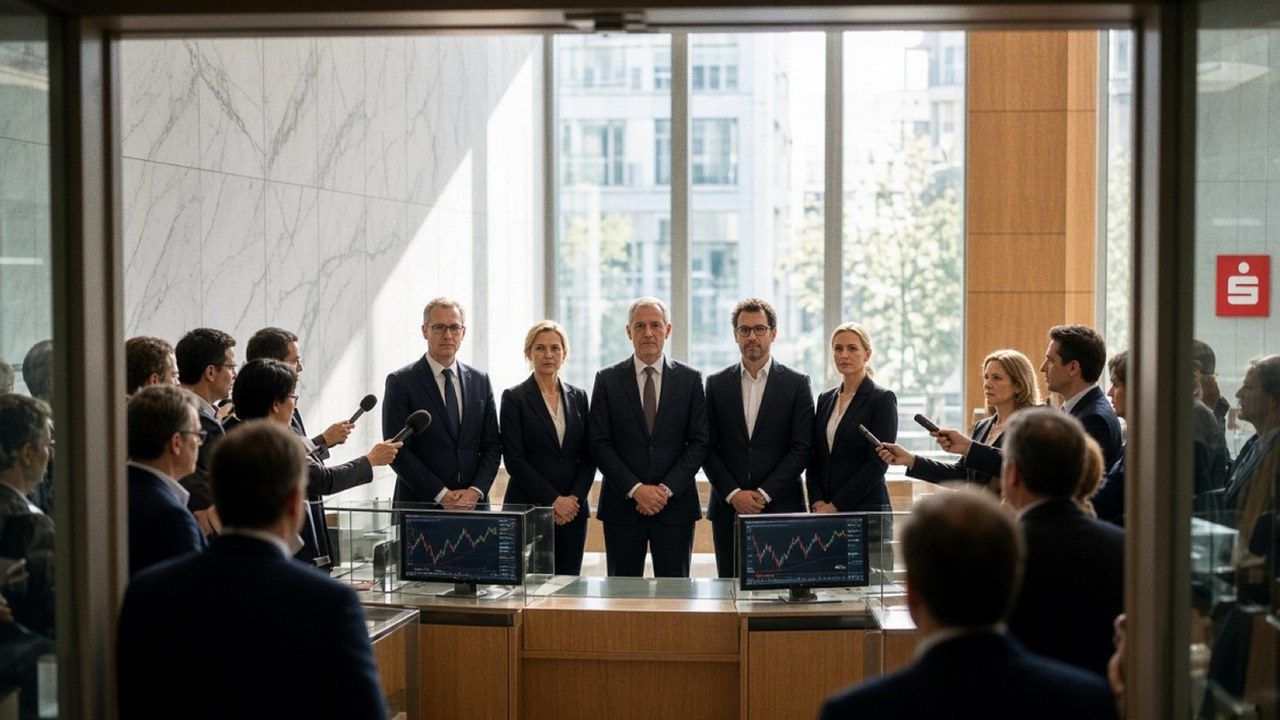
Retail crypto trading launched at five regional savings banks on October 19, 2026, offering five digital tokens rather than four. The 42 million figure counts the entire network's client base, not account holders eligible to trade today.
 ClaraAuthorComing December 1
 RafaVisual artistComing December 1
 JolinaMarketingComing December 1
German savings banks open crypto trading to five regions
Local public lenders begin offering digital tokens through their standard app, starting with a fraction of their 42 million customers.
In a nutshell
Germany's publicly owned savings banks have reversed a years-long ban and introduced retail cryptocurrency trading directly into their smartphone app. The launch is far from nationwide: it began on October 19 at just five regional branches offering five tokens through DekaBank, while the remaining hundreds of independent savings banks decide whether to follow.
Highlights
- Exactly five regional savings banks activated crypto trading on October 19, 2026.
- The service offers spot trading in five tokens: Bitcoin, Ether, XRP, Solana and Polygon.
- Every trade carries a fixed fee of 0.99 euros plus an embedded price spread.
- The 42 million figure represents the whole network's customer base, not active crypto users.
- Digital coin holdings have a transaction ceiling of 250,000 euros and lack standard bank deposit insurance.
From the Editor’s Diary
When traditional public lenders adopt speculative tokens, they make market access effortless without removing the underlying danger. Putting crypto inside a trusted hometown banking app lowers the barrier to entry, but it leaves all risk of loss squarely in the customer's hands.
Who's involved
German Savings Banks and Giro Association (DSGV)
The umbrella group speaking for Germany's local public savings banks
goal → Balance public appetite for digital tokens with customer safety while letting each member bank choose its own path
DekaBank
The central investment manager owned by the savings bank group
goal → Run a single, regulated digital token service that local branches can turn on without building their own systems
Frankfurter Sparkasse, Sparkasse Rottal-Inn, Niederrheinische Sparkasse RheinLippe, Taunus Sparkasse and Sparkasse Karls
The five regional savings banks that switched on the feature first
goal → Give local account holders access to digital assets without building separate trading systems
Börse Stuttgart Digital
The digital division of the Stuttgart stock exchange
goal → Supply trade execution and market depth to DekaBank's retail network
Joachim Schmalzl
A senior managing director at the national savings banks association
goal → Explain the slow rollout, highlight consumer protections and stop the public from assuming nationwide access is already live
German Sparkassen customers
Regular savers and households with accounts at regional savings banks
goal → Gain an easy way to buy digital tokens from their phones while bearing all market risks and trade charges alone
In short
Germany's local public savings banks have crossed a long-held line by letting ordinary savers buy cryptocurrencies directly from their everyday checking app. This matters because it brings digital tokens into the country's most traditional banking network, giving volatile assets an easy doorstep into mainstream household finance.
The move makes it likely that dozens more local savings banks will follow over the coming year, gradually turning a fringe speculative market into a standard feature of German retail banking. That spread is probable rather than guaranteed, because each regional branch remains legally free to say no.
Trading opened on October 19, 2026, at just five local branches, with DekaBank running the behind-the-scenes system and Börse Stuttgart Digital supplying the market trade connections. For now, only adults who live and pay taxes purely in Germany and bank with one of those five locations can take part. Users pay a flat 0.99 euro fee per trade plus a built-in price markup, and their crypto holdings lack the state-backed safety guarantees that protect ordinary cash deposits.
How it unfolded
An Early Crypto Wallet Plan Becomes Public
In late 2021, news reports revealed that Germany's cautious savings bank network was testing ways to let regular savers hold digital coins in their everyday bank accounts. The national association confirmed an exploratory team was looking into the idea, though it stressed that no firm launch had been agreed.
Consumer Protection Halts the Original Plan
That early plan stalled when national leadership warned member banks to steer clear of retail crypto trading, citing wild price swings that ordinary savers could not safely predict. The group kept researching digital records for traditional financial products, but it shut down immediate dreams of retail coin trading across the network.
The Savings Banks Reverse Course
Three years later, strong customer interest and clearer European finance rules convinced the group to drop its ban. National leaders authorized DekaBank to build a shared trading engine that member branches could plug into at will, though they kept stern warnings that savers could lose every euro they put into digital coins.
Trading Infrastructure Is Put in Place
The project took physical shape when DekaBank partnered with Börse Stuttgart Digital to construct the underlying plumbing. Under the deal, the Stuttgart exchange division agreed to route the live trades, while DekaBank agreed to store the digital tokens and connect the system directly into local branch banking apps during 2026.
The Launch Window Narrows
By mid-2026, reports revealed that the rollout would begin with five specific tokens, a 0.99 euro transaction fee, and a small trial before public release. In early October, industry reporting confirmed that only a tiny group of branches would switch the feature on during the first wave, leaving wider expansion for later months.
Five Banks Switch On, Not Forty-Two Million Customers
On October 19, five regional savings banks officially opened live trading for Bitcoin, Ether, XRP, Solana and Polygon inside their phone apps. Savers hold their tokens through DekaBank rather than on private keys at home, pay 0.99 euros plus a market spread per trade, and face an account ceiling of 250,000 euros without standard bank deposit insurance. Network officials hope 30 to 40 more institutions will join each month, but each local bank must choose to join on its own schedule.
Where things stand
As of October 20, 2026, the service remains active at exactly five regional savings banks: Frankfurter Sparkasse, Sparkasse Rottal-Inn, Niederrheinische Sparkasse RheinLippe, Taunus Sparkasse and Sparkasse Karlsruhe. No further institutions have joined since the opening day, and no dated timetable has been published for individual banks waiting in line.
The widely quoted figure of 42 million users reflects the total customer reach of all 337 German savings banks combined, not the tiny share that can buy crypto today. Whether the service expands into a national habit will depend on how many independent local boards decide to sign up over the coming year.