
We analyzed this claim: is it true that
Coinbase received final federal approval to launch an uninsured national trust bank?
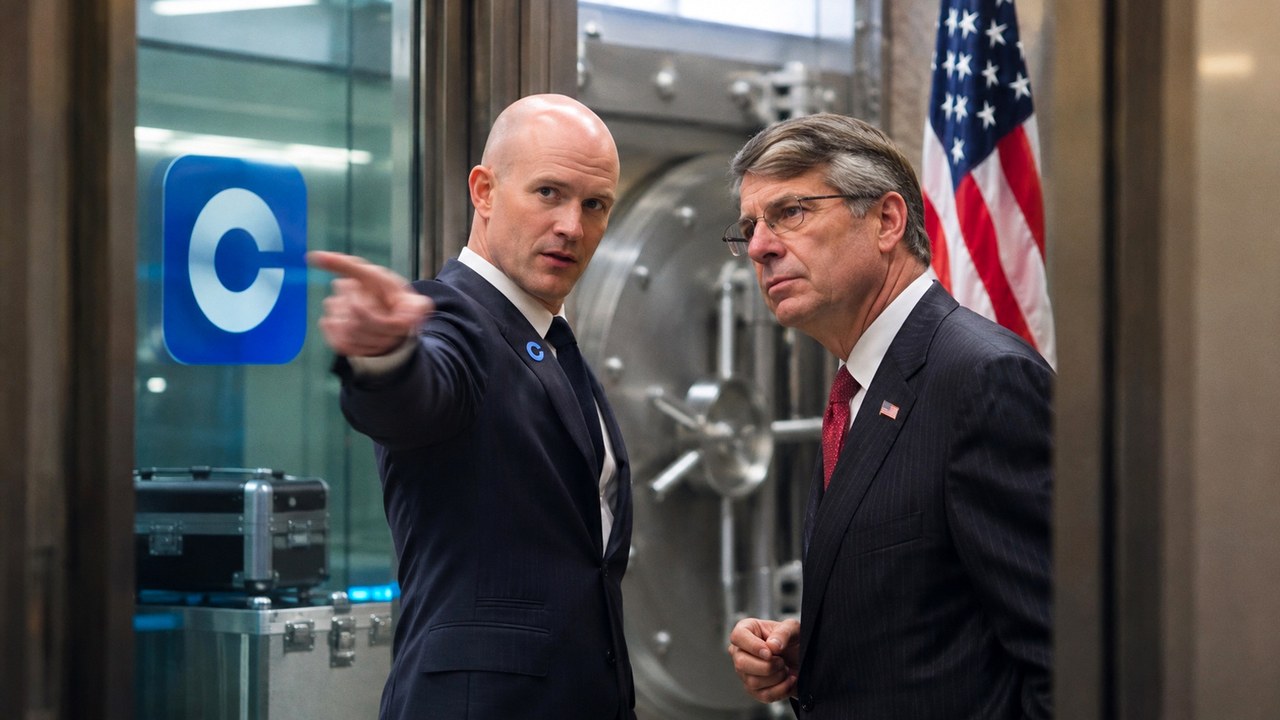
Federal banking records show the charter took effect on November 6, 2026, confirming Coinbase has final legal clearance to safeguard digital assets for large investors, though it has not yet revealed when operations will start.
 ClaraAuthorComing December 1
 RafaVisual artistComing December 1
 JolinaMarketingComing December 1
Coinbase wins federal charter for crypto custody
Federal banking regulators cleared Coinbase to run a national trust company, giving the cryptocurrency giant a single nationwide rulebook while keeping everyday deposit-taking and stablecoin issuance off the table.
In a nutshell
Coinbase has won final federal permission to operate a national trust bank, allowing it to safeguard cryptocurrency for institutional clients under uniform nationwide supervision. While the charter gives the crypto giant the regulatory status of a traditional wealth custodian, it does not allow ordinary deposit-taking or stablecoin issuance, and Coinbase has yet to announce when client assets will actually begin moving into the new entity.
Highlights
- Coinbase received final federal approval for its national trust bank charter on November 6, 2026.
- The company reported holding $245.7 billion in assets under custody as of June 30, 2025.
- Regulators required Coinbase to maintain at least $60 million in core capital before opening.
- The approved plan sets a three-year timeline to migrate clients from Coinbase's New York trust company.
From the Editor’s Diary
A federal bank charter gives digital asset custodians the credibility of traditional finance, but regulatory clearance does not instantly translate into operational launch.
Who's involved
Coinbase Global, Inc.
Publicly traded parent company of Coinbase National Trust Company
goal → Shift its institutional custody business under uniform federal oversight and attract larger financial clients
Office of the Comptroller of the Currency (OCC)
Federal agency within the U.S. Treasury Department that charters and supervises national banks
goal → Supervise approved trust activities while enforcing strict capital, liquidity, and safety rules
Coinbase National Trust Company (CNTC)
Newly authorized federal trust bank based in New York and owned by Coinbase Global
goal → Safeguard digital assets under federal rules and absorb customer accounts from its state affiliate
Rick Schonberg
Coinbase custody executive and named chief executive of the new national trust bank
goal → Launch the core custody business and build client confidence under federal supervision
Independent Community Bankers of America (ICBA)
Trade group representing local community banks across the United States
goal → Limit federal trust charters for crypto companies through court challenges to protect traditional lenders
New York State Department of Financial Services (NYDFS)
State regulator that originally licensed and supervised Coinbase's trust business
goal → Protect consumers and maintain oversight as Coinbase transfers assets to its federal entity
Coinbase Custody Trust Company, LLC (CCTC)
State-chartered New York subsidiary currently holding customer cryptocurrency
goal → Continue safeguarding assets until they transfer to the new federal entity under a three-year plan
In short
A major cryptocurrency company now holds the same type of federal bank charter once reserved for traditional wealth managers, bringing digital assets directly under nationwide supervision.
This approval makes it likely that Coinbase will gradually shift billions of dollars in client crypto out of state-level oversight and into a single federal framework over the next three years.
Whether that rollout happens smoothly is uncertain, because community banks are suing to block these licenses and Coinbase has not yet set a launch date.
How it unfolded
Coinbase applies for a federal trust charter
Coinbase applied to the Office of the Comptroller of the Currency on October 3, 2025, to create a federally supervised trust company in New York. The firm was not starting from scratch: it had operated under New York state licenses since 2017 and ran a state-chartered trust company since 2018. Greg Tusar, a company executive, explained that the new license would not turn Coinbase into a conventional bank. Independent reports from Bloomberg News and The Block followed shortly after, detailing Coinbase's effort to place its digital asset storage under nationwide rules.
A state-regulated business seeks national reach
The application made Coinbase's strategy clear: replace a patchwork of state rules with one federal supervisor. The company reported holding $245.7 billion in customer assets as of June 30, 2025, and proposed keeping those holdings in segregated storage accounts. It also outlined plans to connect custody clients to outside Coinbase trading services and explored future payment tools. The federal regulator opened a month-long public comment window that closed on November 3, asking whether crypto custody matched the traditional duties of a national trust bank.
Federal regulators grant conditional approval
Federal regulators updated their chartering language in early 2026 to clarify that national trust banks can run modern trust operations alongside traditional duties. That change took effect on April 1, and the agency granted Coinbase conditional approval the next day. The decision confirmed that safeguarding cryptocurrency is a lawful trust activity, but it set strict safety conditions. Coinbase had to provide at least $60 million in core capital, hold liquid reserves covering 180 days of operating expenses, and promise not to issue stablecoins under this license.
Community banks sue over crypto charters
Small local lenders pushed back against federal crypto charters. On October 2, the Independent Community Bankers of America sued the regulator in federal court, claiming the agency overstepped its powers by approving trust charters for crypto firms. The trade group argued the charters could mislead savers into expecting federal deposit insurance and hurt traditional banks. The lawsuit did not stop regulators from acting: on October 26, the agency granted final approval to Ripple National Trust Bank, another digital asset firm, to manage reserves for its stablecoin.
Final approval arrives without an opening date
The charter crossed its final legal hurdle on Friday, November 6, when federal records marked the license active. Coinbase announced the milestone on Monday, November 9, with trust head Rick Schonberg stating that the new company would focus first on core custody services. The announcement confirmed the legal permission, but it left key operational details unanswered. Coinbase did not name a date for opening its doors to customers, nor did it explain exactly when existing accounts would transfer from its New York trust company.
Where things stand
Coinbase National Trust Company holds an active federal trust charter from the Office of the Comptroller of the Currency as of November 9, 2026. Headquartered in New York, the new bank is legally authorized to hold cryptocurrency for institutions under strict fiduciary rules. It is not an ordinary commercial bank: customer assets carry no federal deposit insurance, and it cannot take consumer deposits or issue stablecoins.
The legal permission is settled, but practical questions remain open. Coinbase has not announced when the new bank will open, when the first customer assets will move over, or whether federal regulators added new conditions to the final license. In court, community banks continue to challenge whether the government has the right to issue trust charters to crypto firms at all.
Sources
- Independent Community Bankers of America, filed federal complaint, case 1:26-cv-03441
- Independent Community Bankers of America, public statement
- Ripple, final national trust charter announcement
- Office of the Comptroller of the Currency, Ripple application register, effective date October 26